
What can acupuncture treat?: A list of common diagnoses and symptoms
What can acupuncture treat?: A list of common diagnoses and symptoms
You can scroll to the list, but I recommend reading at least the next paragraph first.
One of the first things you learn in acupuncture school is that “acupuncture can treat everything.” This becomes a sort of joke because it gets repeated and thrown around so much. Acupuncture comes from Chinese Medicine, which is a system of understanding the body holistically. As such, any condition/symptoms/disease/injury can be understood through the lens of CM (Chinese Medicine); and by applying treatment principles from CM we can determine a treatment. But the truth is that just because all health conditions
can be treated by Chinese Medicine doesn’t mean that all conditions
should
be treated by Chinese Medicine. There are many reasons and conditions for which Chinese Medicine excels, and there are some cases in which Western Medicine is the best primary intervention.
What is acupuncture?
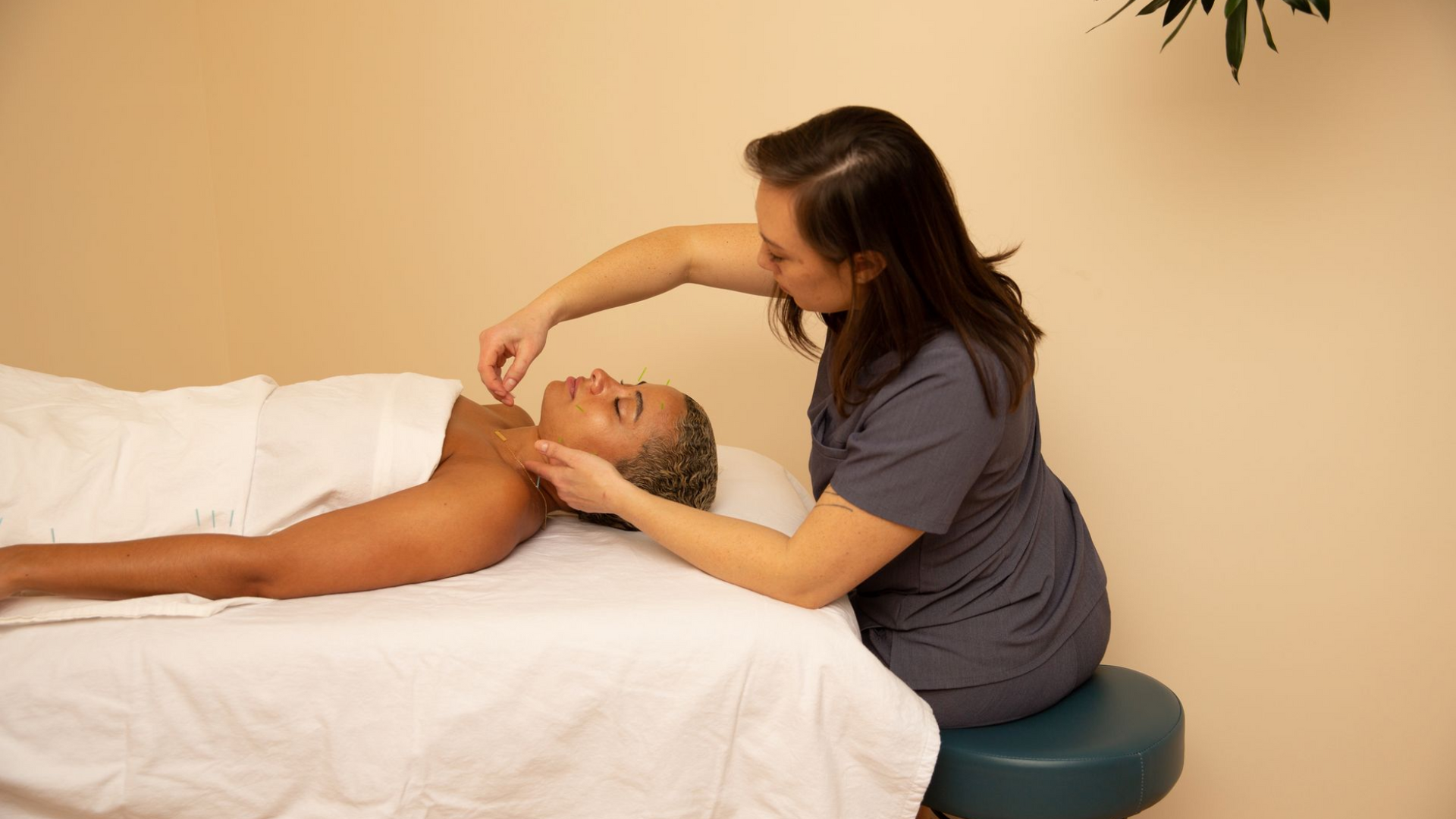
Acupuncture involves the insertion of thin flexible needles into specific points (acupoints) on the body. Acupuncture is one of several treatment techniques that comes from Chinese Medicine. Other treatment modalities and techniques include:
- Tui Na (massage and “bone setting” similar to chiropractic care),
- Gua sha (a manual scraping technique; deeper strokes for musculoskeletal and a lighter technique for facial rejuvenation)
- Cupping (applying a vacuum to the skin to promote healing)
- Moxibustion
- Qi Gong or Tai Qi
- Nutritional guidance
- Lifestyle guidance
During an acupuncture treatment, an acupuncturist is guided by the theory of Chinese Medicine, as well as anatomical considerations for musculoskeletal issues when selecting points for a treatment. Other treatment techniques from Chinese Medicine may be included or recommended as part of a treatment plan. Electroacupuncture (a modern advancement) may also be used. This involves applying gentle electrical stimulation to acupuncture points by connecting a device to acupuncture needles.
A note about Chinese Herbal Therapy
Acupuncture is the most well known modality from Chinese Medicine in the US. Chinese Herbal therapy is a lesser known, equally powerful medicine. Most people searching for a list like this one are probably looking for a health solution and to learn more about Chinese Medicine, and you are perhaps not so attached to acupuncture specifically. So - keep in mind that if you see an acupuncturist that is trained in herbal therapy (not all are) they may recommend herbal therapy as a secondary or primary treatment modality for you for some of the listed conditions.
When does acupuncture and Chinese Medicine excel?
- Preventive medicine
- Coughs, colds, flus (helps to boost the immune system)
- Muscle and nerve health (helps to prevent injury and improve musculoskeletal recovery after activity)
- Mental and emotional health (helps to regulate the nervous system by “turning down” fight or flight response and engaging the rest and digest response)
- Reproductive health (for regular, pain free menstrual cycles, peri/menopausal health, fertility)
- Chronic conditions such as (this is not an exhaustive list)
- Chronic pain - joint, muscle and nerve pain of all kinds
- Digestive issues
- Insomnia
- Menstrual complaints
- Post-viral syndromes
- Depression and anxiety
- Headaches, including migraines
- Complaints that are not fully understood by western medicine.
- This includes umbrella diagnoses like fibromyalgia, IBS, and some autoimmune conditions. These diagnoses are determined by ruling out other causes of symptoms; there’s no test that gives a clear positive for these conditions. For example, if you are suffering from chronic constipation and there are no signs of anything abnormal on blood work, imaging, or any other testing, your doctor may say they “can’t find anything wrong.” However, in acknowledgement of the fact that something is in fact wrong (the constipation) they may diagnose you with IBS-C (irritable bowel syndrome w/ constipation).
- Complaints that are sub-clinical from a western stand point
- A common example of this is bothersome or painful menstrual cramps. Menstrual cramps unless very severe are considered “normal.” Birth control may be offered to manage symptoms hormonally, but not all patients are interested in taking birth control. Chinese Medicine practitioners generally agree that this is sort of like a bandaid; it’s not addressing the root cause of painful periods. Many patients that seek Chinese Medicine are looking for something that addresses the root cause of their discomfort, which it does!
- Cases in which the conventional treatment fails
- Sometimes there's a really obvious and proven western medical treatment for a condition and it just doesn’t work for someone. One example of this is antibiotic treatment for SIBO (small intestine bacterial overgrowth). This condition is linked to a host of unpleasant symptoms and is treated by a course (or more) of antibiotics. Many patients experience relief. Some don’t. When western medicine fails, Chinese Medicine often works. Patients who have “tried everything” tend to benefit from acupuncture and/or Chinese Herbal medicine.
When is Western Medicine the better option?
- Antibiotic treatment is required for many bacterial infections, especially contagious ones such as strep throat.
- In some cases stubborn and chronic bacterial infections may benefit from Chinese herbal medicine when antibiotics have failed.
- Trauma in which stabilization and/or surgery is clearly required
- Severe conditions in which hospitalization or medication is clearly indicated
- In the case of large masses, surgery may be necessary
- Chinese Medicine may help in some cases of smaller masses including small kidney stones, gallstones, fibroids and benign cysts.
- Some mental health conditions are best treated with pharmaceuticals
- Cancer
In many cases Chinese Medicine offers great benefit as a supportive and/or rehabilitative therapy alongside conventional treatment.
What can acupuncture treat?: A list of common diagnoses and symptoms*
Chronic Pain Conditions
- Chronic joint, muscle and nerve pain of all kinds including:
- Neck pain, cervicalgia
- Shoulder pain
- Frozen shoulder
- Back pain
- Carpal tunnel syndrome
- Jaw pain, TMJ (temporo-mandibular joint) syndrome, TMD, bruxism (clenching and and grinding)
- Sciatica and piriformis syndrome
- Knee pain, patellar maltracking syndrome, IT band pain syndrome
- Foot pain, plantar fasciitis, morton’s neuroma
- Achilles tendonitis
- Fibromyalgia
Acute Pain Conditions
- Joint, muscle and nerve injuries; especially strains and sprains
- Back spasm, back pain, lumbago
- Sciatica and piriformis syndrome flare
- Acute spasm in any region of the body
- Acute flare up of trigger point pain
- Frozen shoulder (adhesive capsulitis)
- Neck pain and stiffness
- Arthritis flare up
- Overuse flare up
- Headaches and migraines
- Post-operative pain
- Dysmenorrhea attack (painful period)
Internal Medicine Concerns
- Digestion
- Constipation
- Diarrhea
- Bloating
- Indigestion
- Acid Reflux
- IBS (irritable bowel syndrome), IBS-C, IBS-D symptoms
- UC (ulcerative colitis) symptoms
- Inflammatory bowel disease symptoms
- SIBO (small intestine bacterial overgrowth) associated symptoms
- Insomnia
- Difficulty falling asleep
- Difficulty staying asleep
- Primary insomnia
- Secondary insomnia in some cases
- Restless leg syndrome
- Post-viral syndromes and associated symptoms including:
- Brain fog
- Chronic fatigue
- Chronic muscle pain
- Insomnia
- Mood
- Depression
- Anxiety
- PTSD
- Stress management
- Reproductive health
- Common but treatable menstrual complaints including bloating, cramps, mood swings, headaches, diarrhea/constipation, back pain
- Amenorrhea (absence of period)
- Dysmenorrhea (painful periods)
- Irregular cycles
- PCOS symptoms
- PMDD (premenstrual dysphoric disorder)
- Fertility support, infertility - for natural conception, IUI, IVF, egg freezing
- Sperm quality
- Peri-menopause and menopausal symptoms
*A brief disclaimer:
Western Medicine Diagnoses. I’ve included western medical diagnosis names in the list. All the information including western medical diagnoses received by a doctor can be helpful information for your Chinese Medicine practitioner. However, acupuncturists do not treat western medical conditions; treatments are guided by principles of Chinese Medicine.
Integrative approach. Some of the conditions listed below may require or benefit from an integrative approach in which a western medical provider is involved. In some cases conventional treatment is also necessary. In these cases acupuncture can still play a vital role in healing.
We provide acupuncture and Chinese herbal therapy for back pain in New York City.
At Gotham Integrative Acupuncture and Wellness we provide acupuncture and Chinese herbal therapy to help our patients get out of pain, sleep well, manage stress and anxiety, get pregnant, have happier periods, and more.
All New Patients start with an in-person Complimentary Consultation. During the consultation, new patients meet with the acupuncturist to go over health history, current complaints, and health goals. We'll determine the best treatment plan for you and answer any questions you may have. You'll have the option to get started with treatment right away, but there's no obligation to do so.
Your treatment plan for back pain, as well as any secondary complaints, may include acupuncture, herbal therapy, or both. We also offer massage therapy for back pain (a consultation is not required to book a massage session).
If you’d like to learn more about how we can help you, book a consultation. For questions, reach us by email at info@gothamholistic.com or phone at 646-255-1332.